History
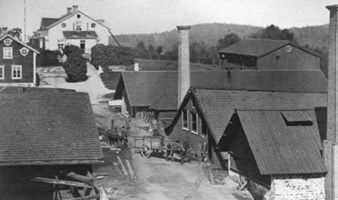
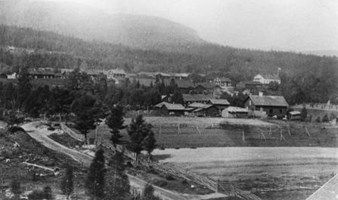
In Lindesnäs, previously called Sunnanbäck, a nail forge had been established by mill inspector Ekman in 1793. Scythes, horseshoes and nails were manufactured here. The Äskan River was dammed to provide a steady power supply and the mill grew. From there, it developed into one of the country's ten largest ironworks, Lindesnäs Bruk, in the mid-19th century.
Between 1854 and 1855, two Lancashire hearths were installed in the bar iron forge . After the mid-19th century, there were plans to concentrate all of Bergslaget's iron processing here. Pig iron from, among others, Lövsjö bruk was refined in Lindesnäs. The mill's products were transported via Lövsjön to Grangärde . In order to improve transport routes, a railway connection to the nearby Lövsjö bruk was planned in the 1860s. Work on the route was started but never completed. The poor infrastructure was probably one of the main reasons that planned expansions during the 1860s and 1870s were not carried out.
For about 100 years, ironworks were operated here in various forms, before the whole thing was moved to Storhyttan in Stora Tuna , which later became Domnarvets Jernverk in Borlänge . Operations at the mill in Lindesnäs ceased completely in 1895.
During the heyday of Lindesnäs Mill, just over 3,300 inhabitants lived in Nås parish, of which about 500 people lived in Lindesnäs. The mill required charcoal , which is why charcoal making became an important occupation for many. From this, forestry developed, which employed numerous forest workers until the 1980s.

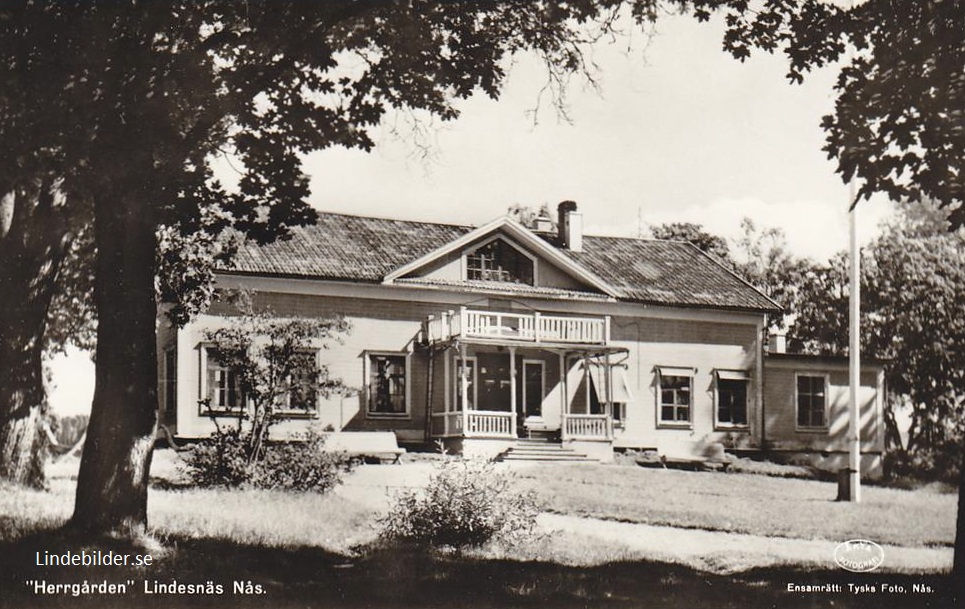
Historical Photo's